Saturday, March 14, 2009
Thursday, March 12, 2009
Evolution Of Robotic Systems
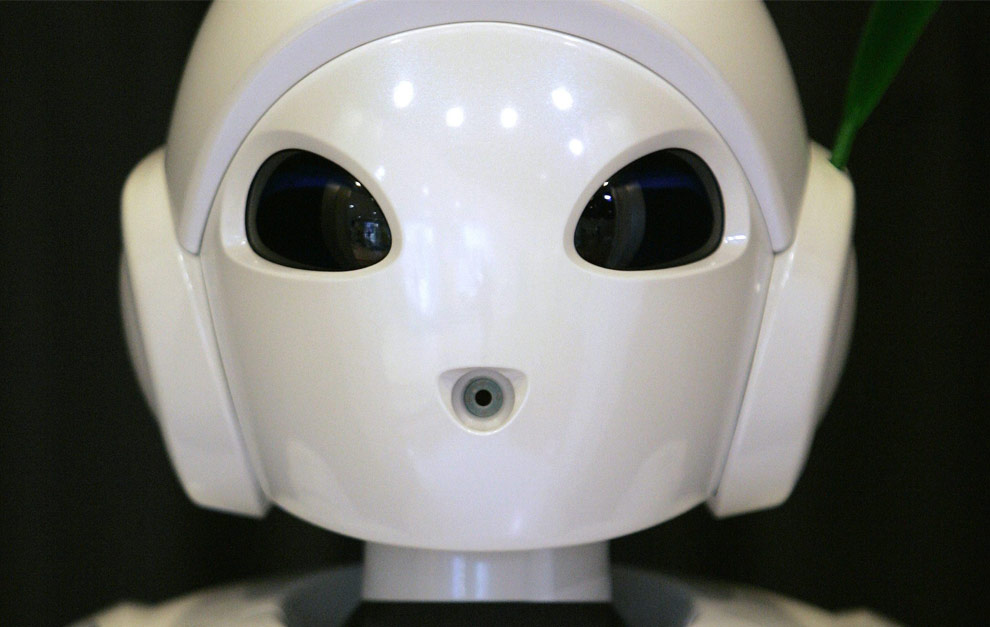
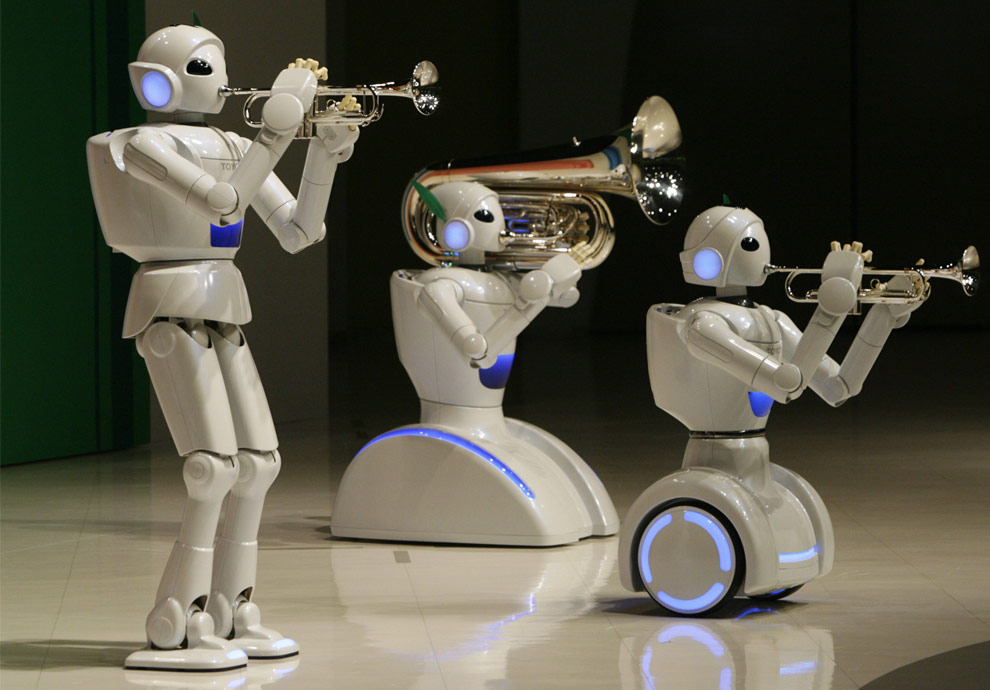
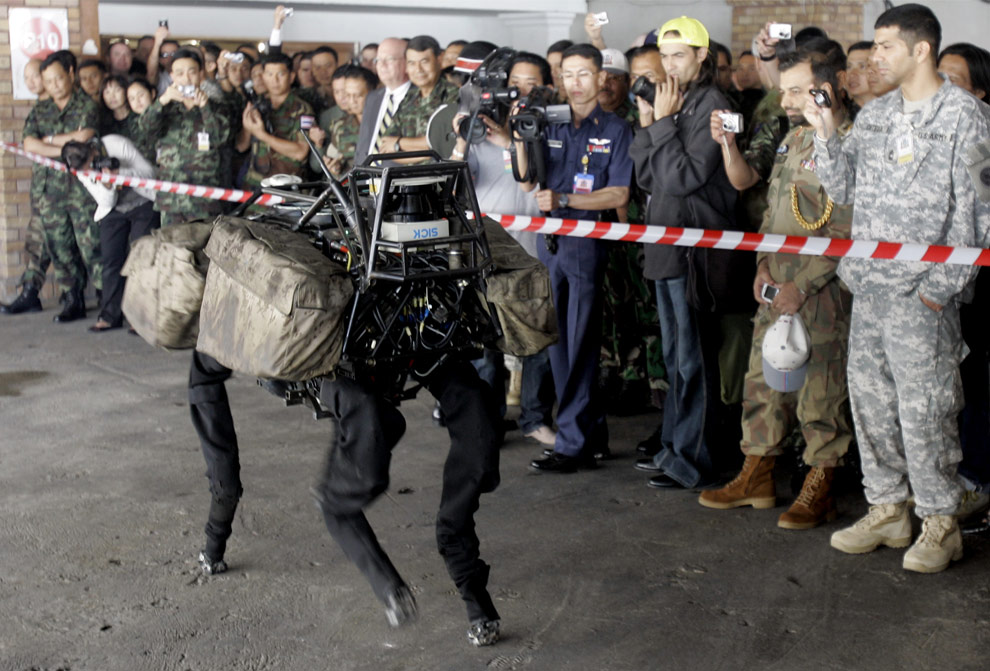
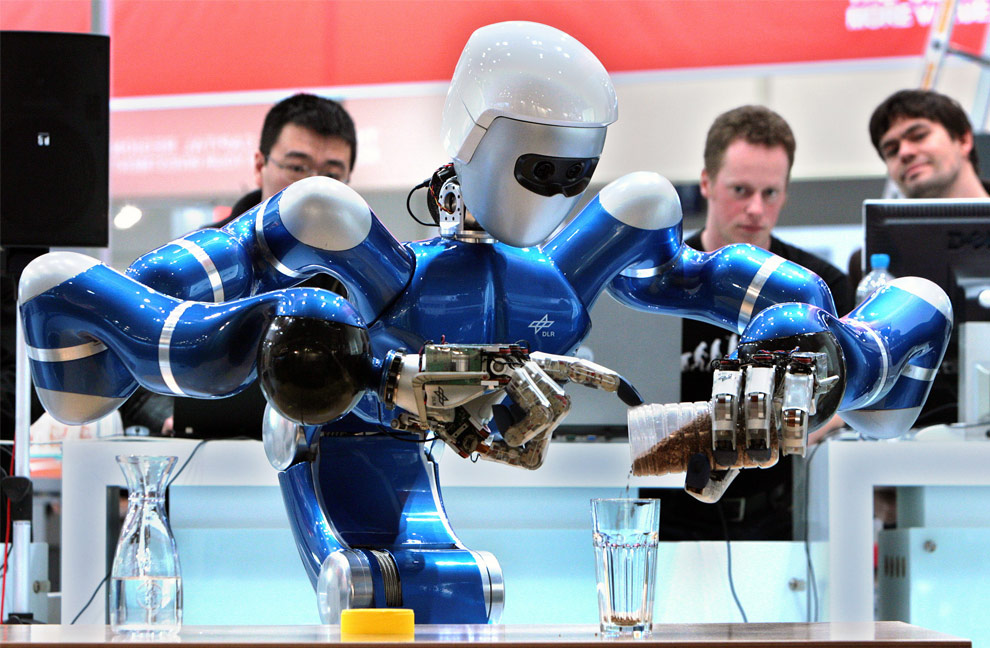
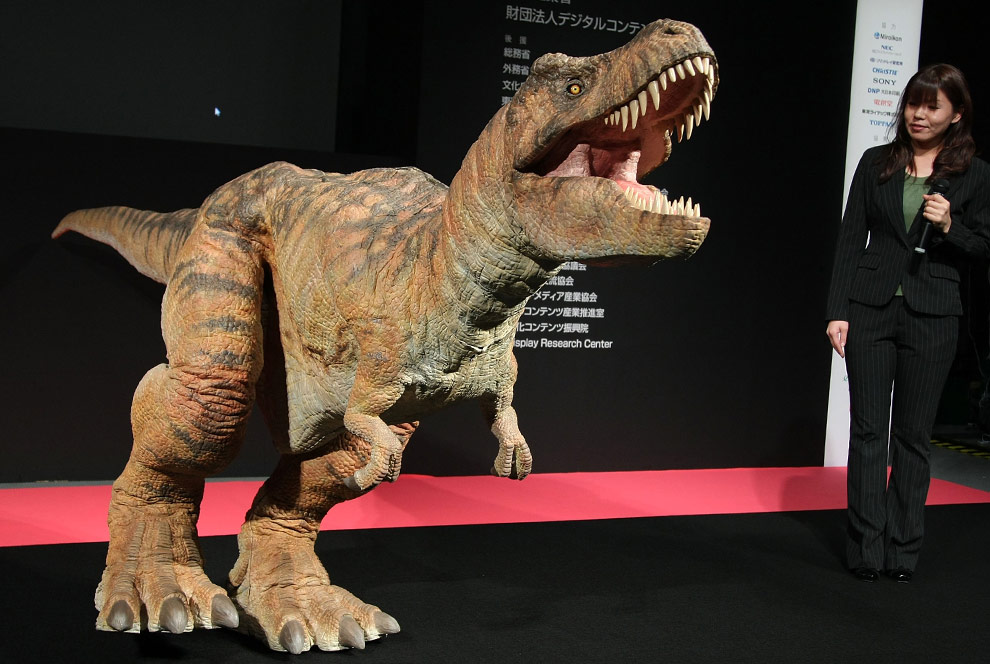
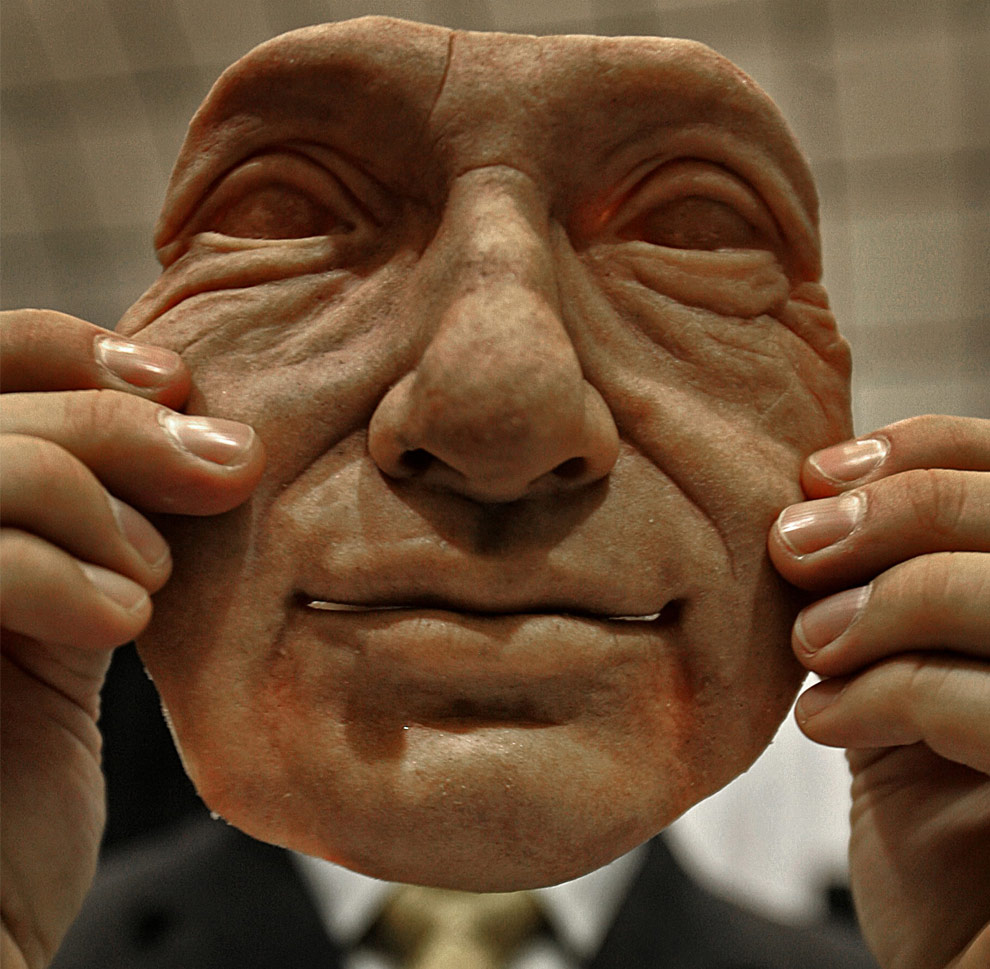
Robotic systems continue to evolve, slowly penetrating many areas of our lives, from manufacturing, medicine and remote exploration to entertainment, security and personal assistance. Developers in Japan are currently building robots to assist the elderly, while NASA develops the next generation of space explorers, and artists are exploring new avenues of entertainment. Collected here are a handful of images of our recent robotic past, and perhaps a glimpse into the near future.

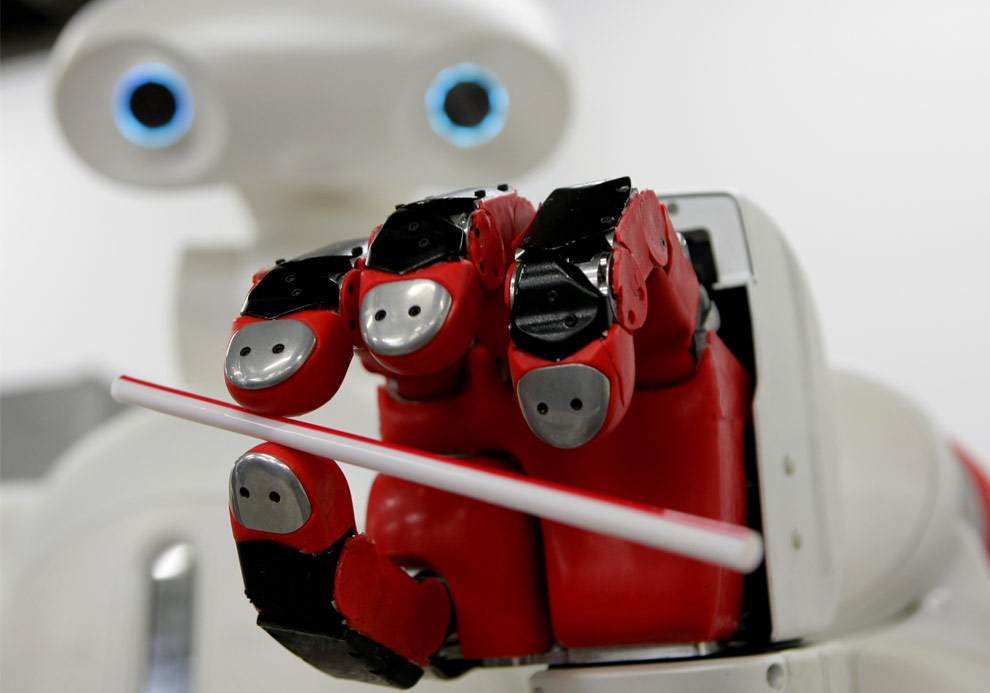
Twendy-One demonstrates its ability to hold delicate objects by manipulating a drinking straw between its fingers at the Department of Mechanical Engineering laboratory in Waseda University in Tokyo, Japan, Wednesday, Jan. 14, 2009. The sophisticated robot has been developed by the university's team, led by Dr. Shigeki Sugano, in hope of supporting people in aging societies. (AP Photo/Shizuo Kambayashi)

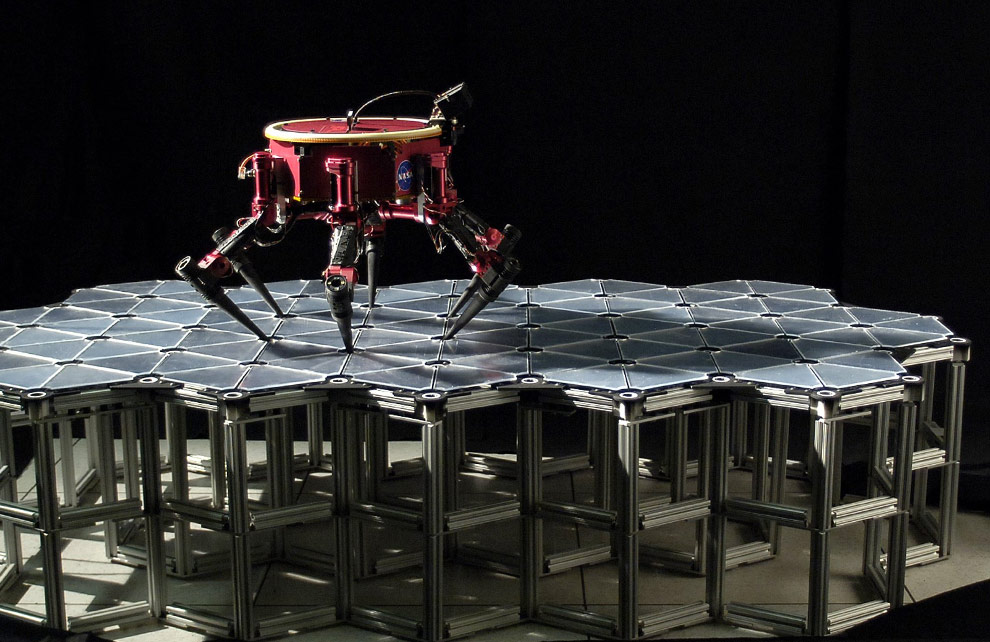
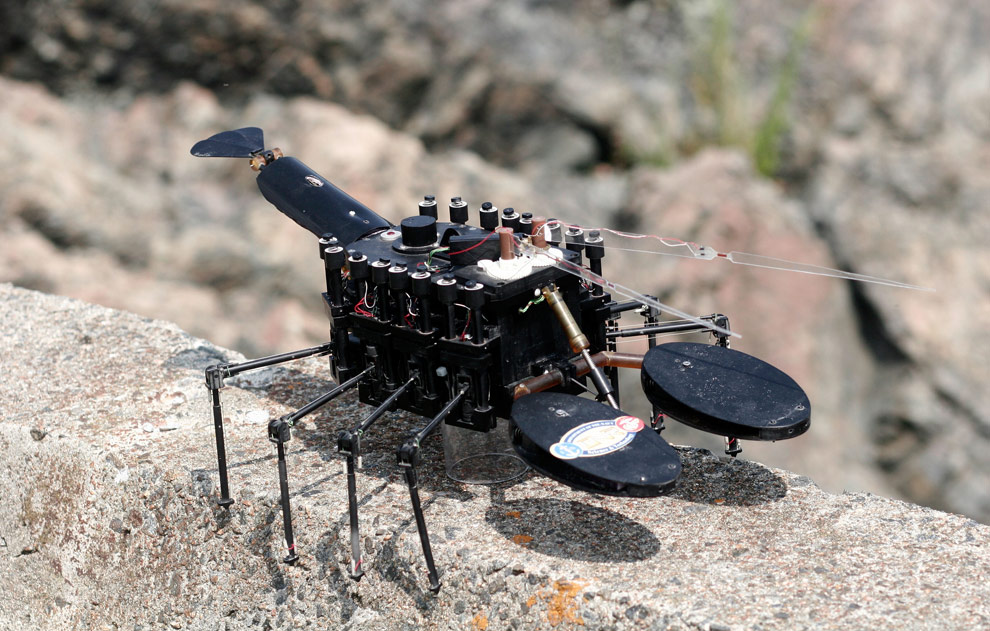
NASA's Limbed Excursion Mechanical Utility Robot (LEMUR) is being designed as an inspection/maintenance robot for equipment in space. A scaled-up version of Lemur IIa, could help build large structures in space. The Lemur IIa pictured here is shown on a scale model of a segmented telescope. (NASA/Planetary Robotics Laboratory)

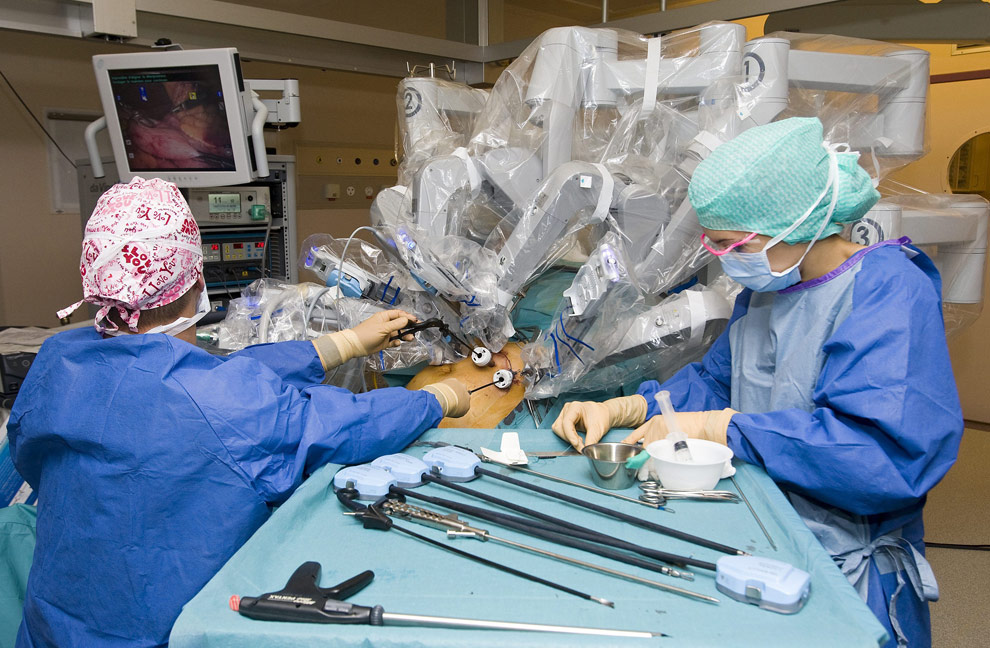
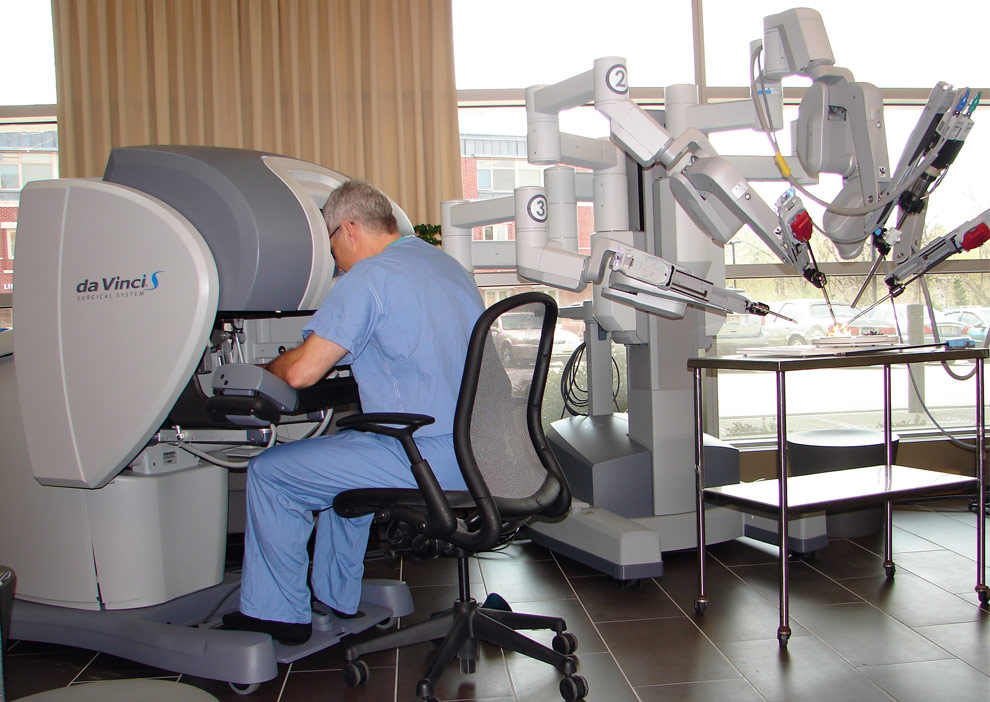
Surgeons use a robot named da Vinci to aid a hernia operation, at the University Hospital Geneva, in Geneva, Switzerland, Thursday, Nov. 13, 2008. The University Hospitals of Geneva opened the department for robotic surgery in 2008, where between 50 and 80 surgeons from around the world will have the possibility to train with da Vinci each year. (AP Photo/Keystone, Salvatore Di Nolfi)

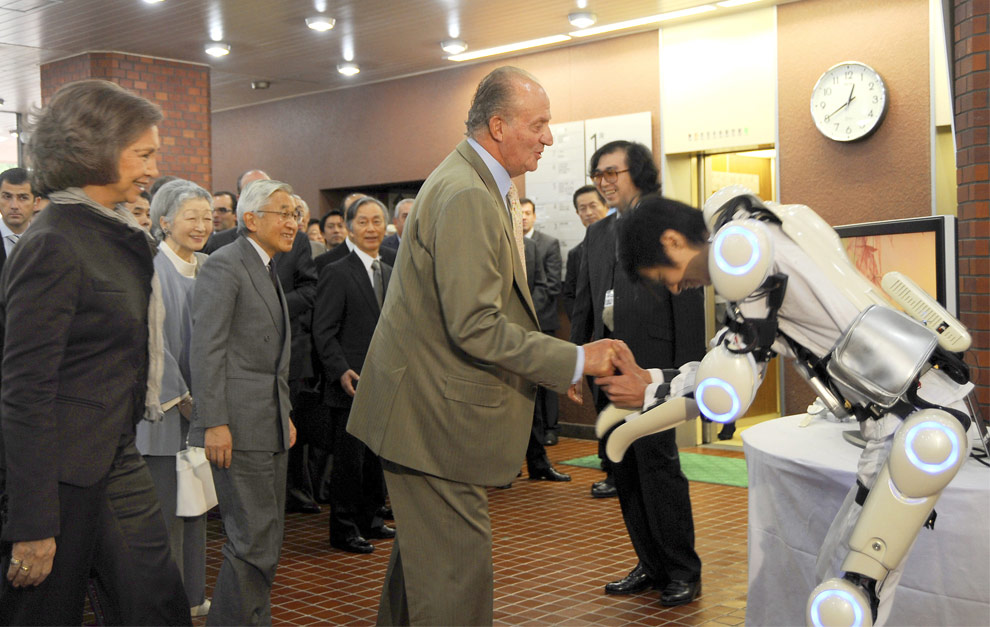
Spanish Queen Sofia King Juan Carlos, Japan's Emperor Akihito and Empress Michiko react after watching watching a performance of a robotic suit called HAL (Hybrid Assistive Limb), which can lift up to 30kg rice bags, at Tsukuba University north of Tokyo on November 12, 2008. (KATSUMI KASAHARA/AFP/Getty Images)

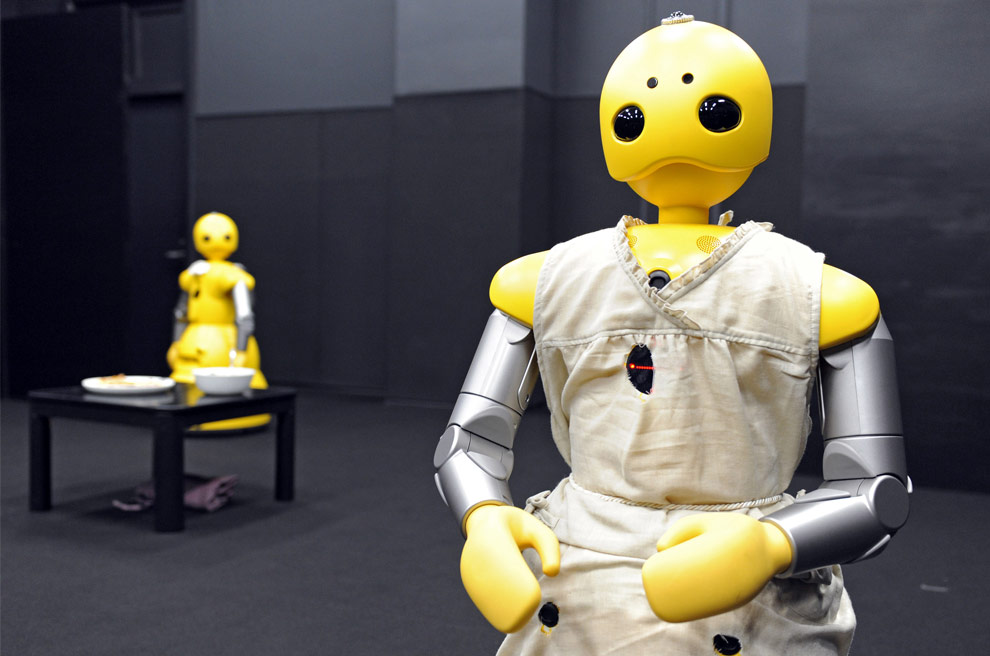
Humanoid robots Wakamaru, produced by Japan's Mitsubishi Heavy Industry, named Momoko (R) and Takeo (L) in the performace, take part in a drama for the world's first robot and human experimental theatre, written and directed by Japanese playwright Oriza Hirata, at Japan's Osaka University in Osaka, western Japan on November 25, 2008. (YOSHIKAZU TSUNO/AFP/Getty Images)

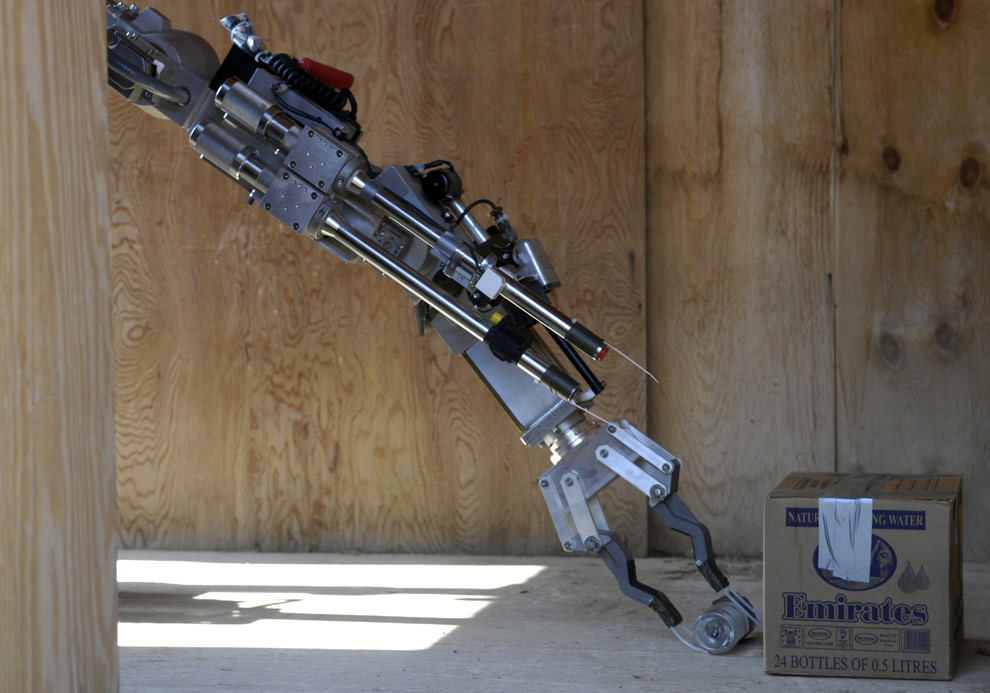
An Explosive Ordinance Disposal robot places an explosive device next to a suspicious package during a demonstration conducted by members of the Special Operations Command Central Command Explosive Ordinance Disposal Unit for participants of the Joint Civilian Orientation Conference 72, at Camp Lemonier, Djibouti, Oct. 21, 2006. (Defense Dept. photo by Cherie A. Thurlby)

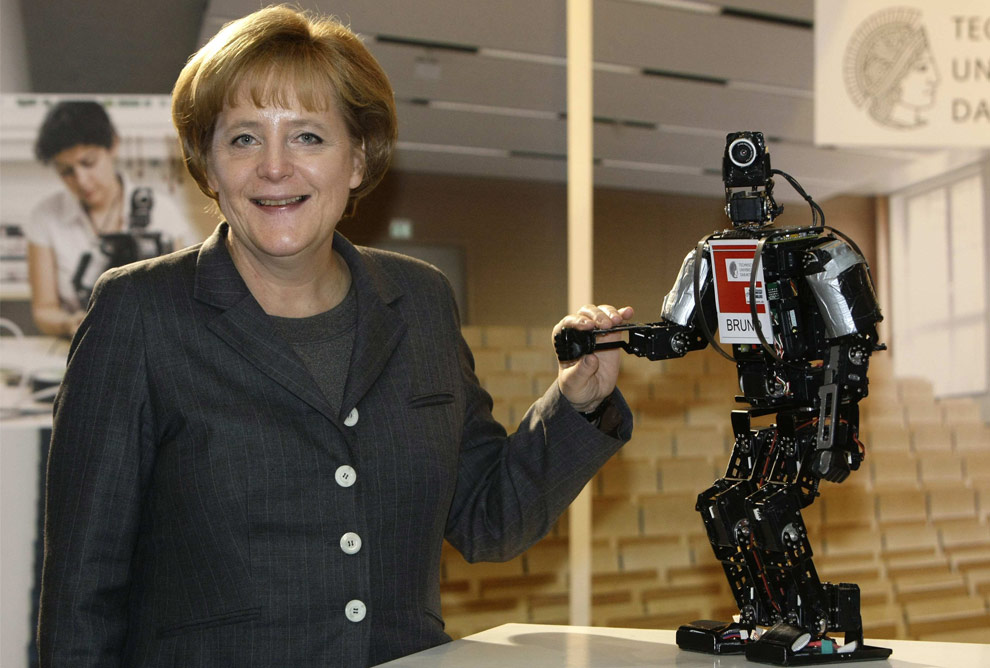
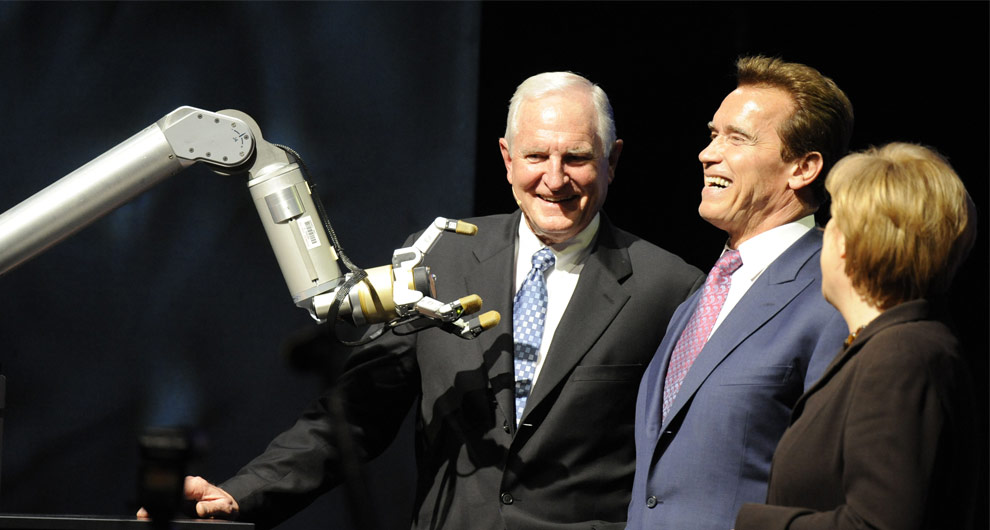
German Chancellor Angela Merkel poses with a robot called "Bruno" at the stand of the Darmstadt University of Technology during the third national IT summit in Darmstadt November 20, 2008. (REUTERS/Alex Grimm)

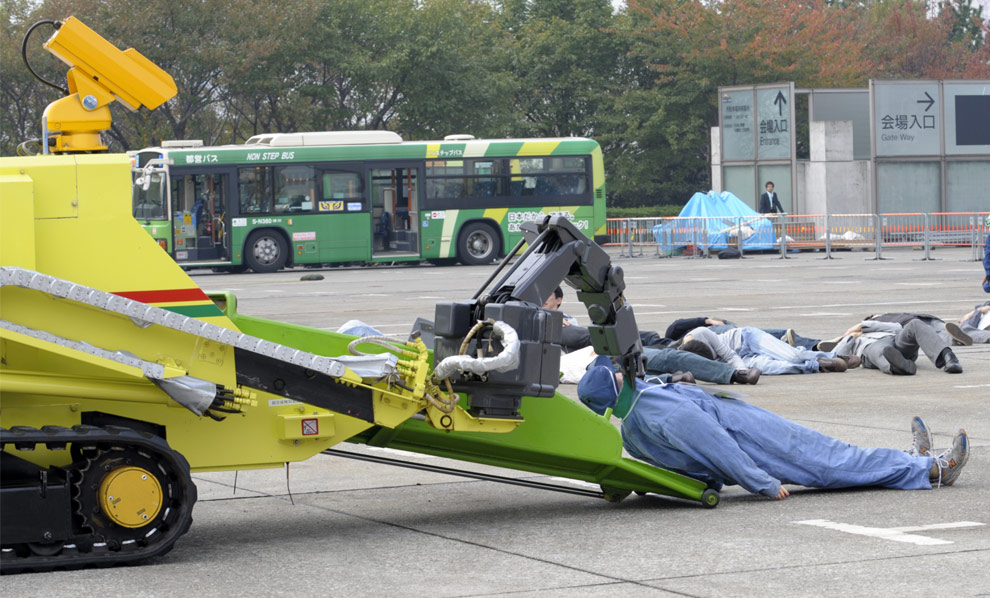
Tokyo Fire Department's rescue robot transfers a mock victim onto itself during an anti-terrorism exercise in the response to a radiological dispersal device in Tokyo, on November 7, 2008. Tokyo Metropolitan government conducted the exercise with eleven organisations including Metropolitan Police Department. (TOSHIFUMI KITAMURA/AFP/Getty Images)

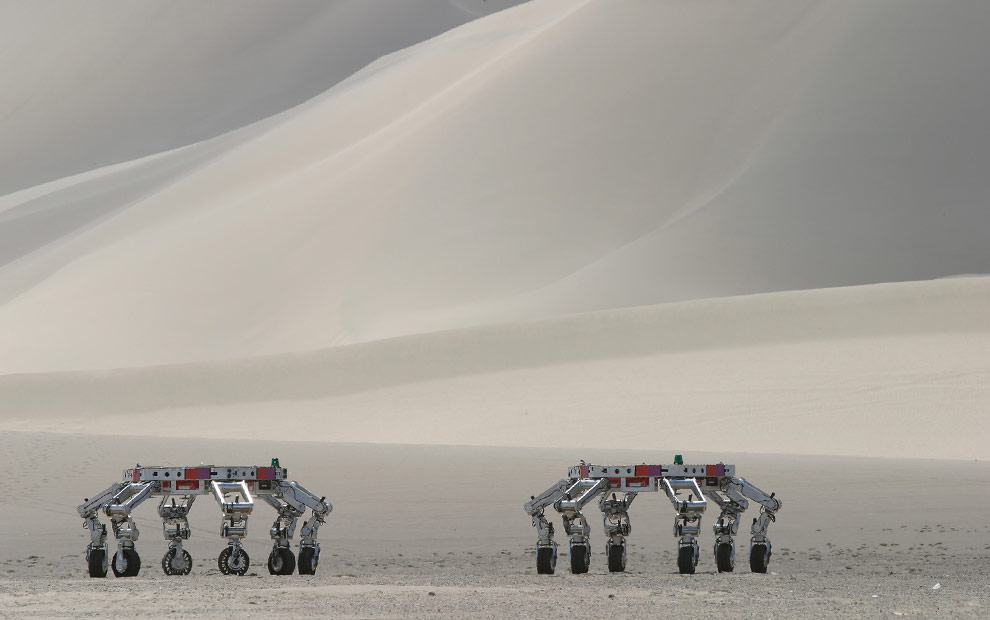
Two All-Terrain Hex-Legged Extra-Terrestrial Explorer (ATHLETE) rovers traverse the desert terrain adjacent to Dumont Dunes, CA. The ATHLETE rovers are being built to be capable of rolling over Apollo-like undulating terrain and "walking" over extremely rough or steep terrain for future lunar missions. (NASA)

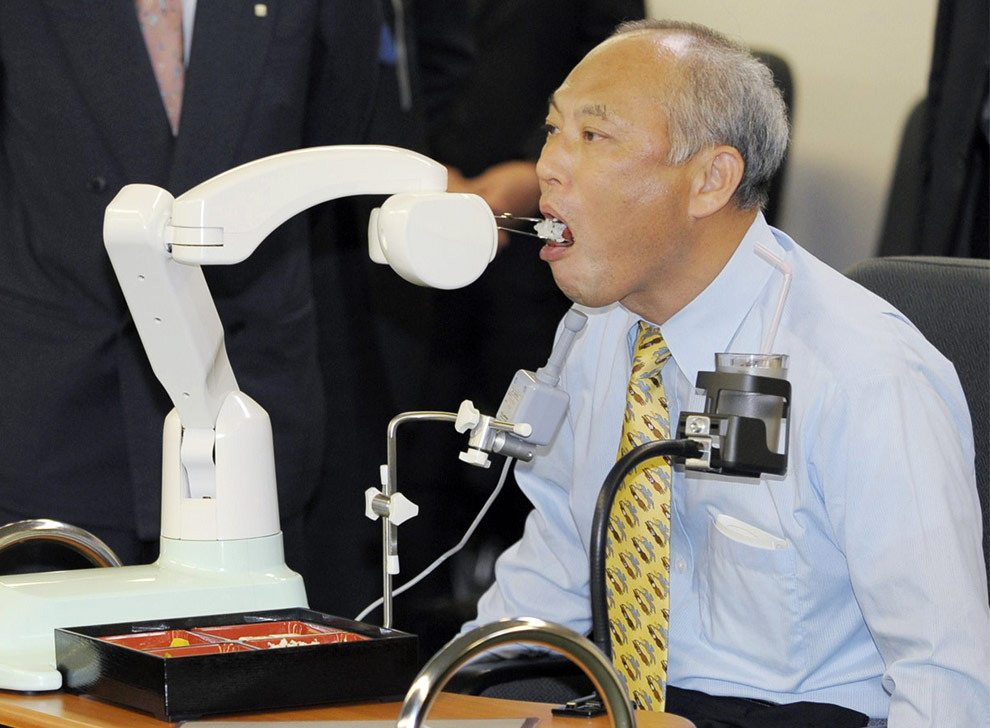
Japan's Health Minister Yoichi Masuzoe sits with an assistive robot called "My Spoon" during a demonstration of health care robots in Tokyo on November 10, 2008. "My Spoon", developed by Japan's Secom is designed to help disabled people eat meals with joystick for controls using one's jaw, hand and feet. (AFP PHOTO/JIJI PRESS)

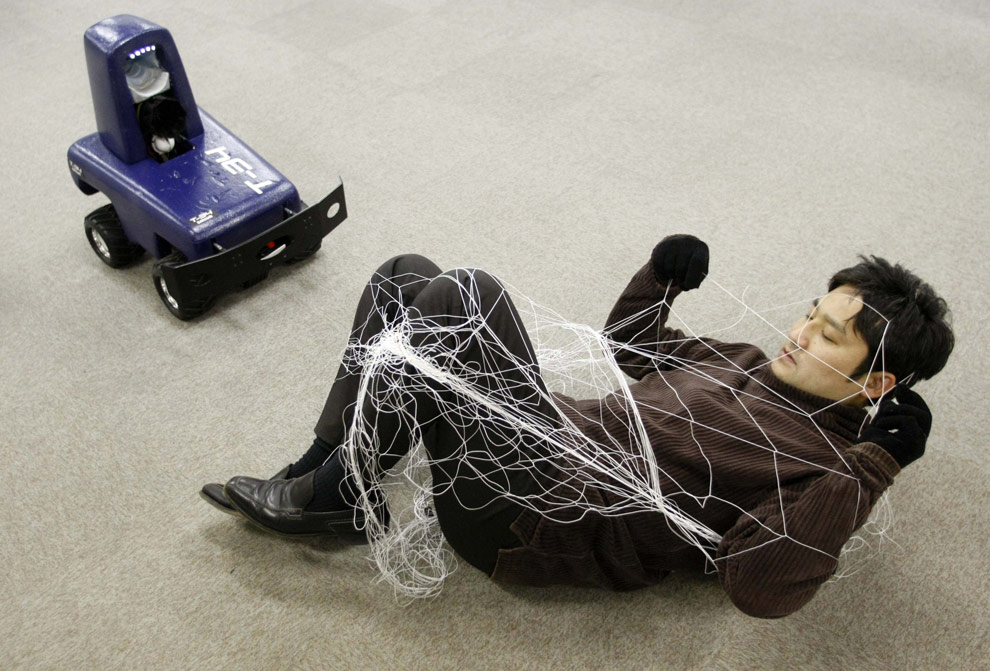
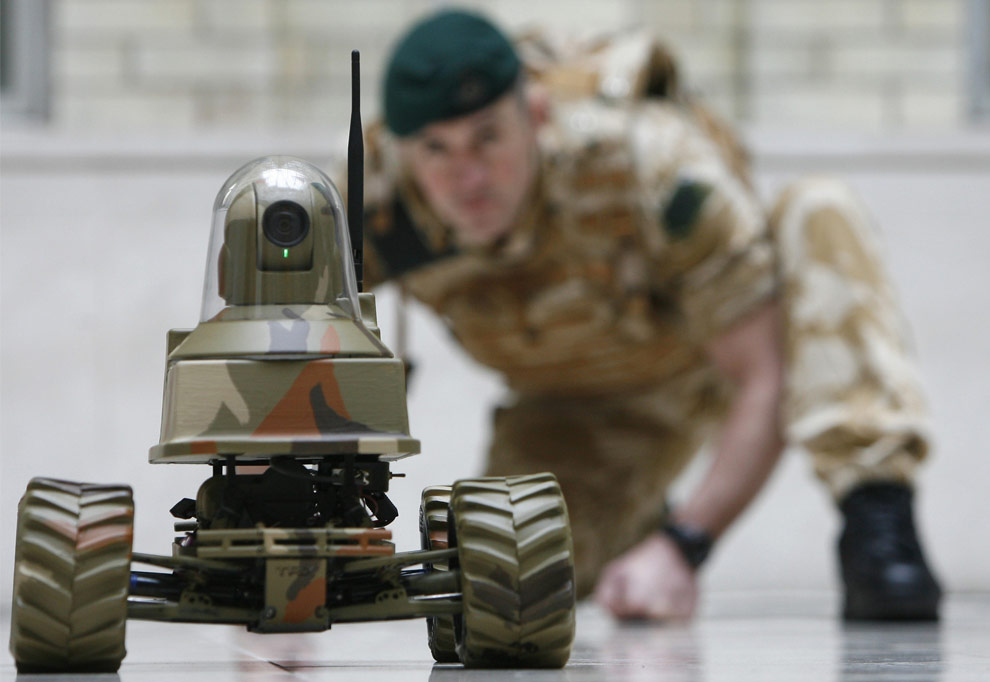
A mock intruder, tangled in a net that was launched by the remote-controlled security robot T-34, lies on the floor while posing beside the robot in Tokyo January 21, 2009. T-34 users can see live images from the robot's camera and control the robot using a mobile phone. The robot, which has sensors that react to body heat and sound, can launch a net against an intruder by remote-control during its surveillance. (REUTERS/Kim Kyung-Hoon)

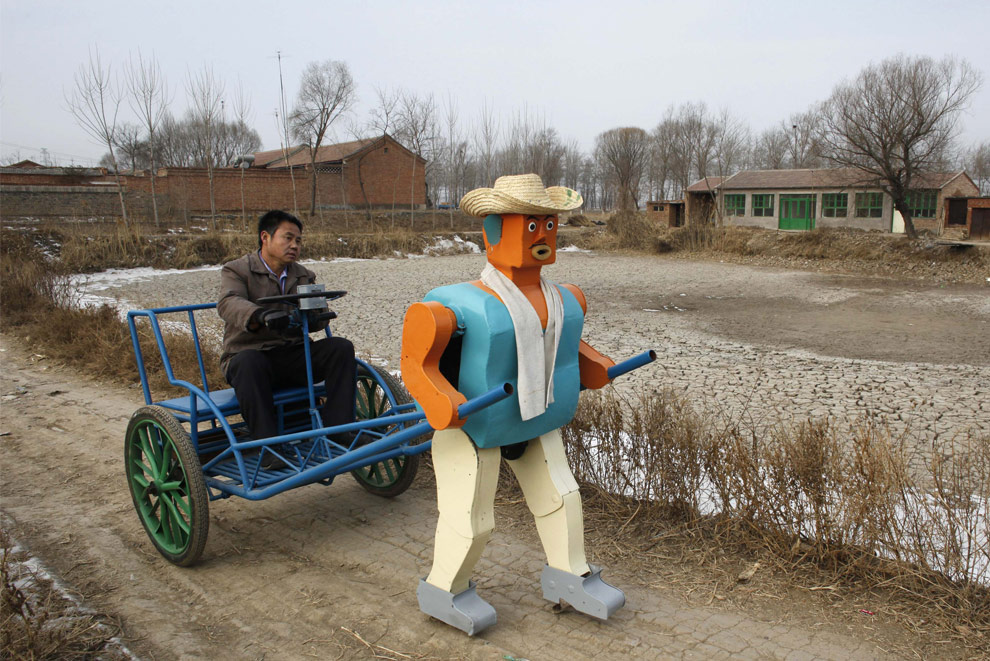
Farmer Wu Yulu drives his rickshaw pulled by a his self-made walking robot near his home in a village at the outskirts of Beijing January 8, 2009. This robot is the latest and largest development of hobby inventor Wu, who started to build robots in 1986, made of wire, metal, screws and nails found in rubbish sites. (REUTERS/Reinhard Krause)

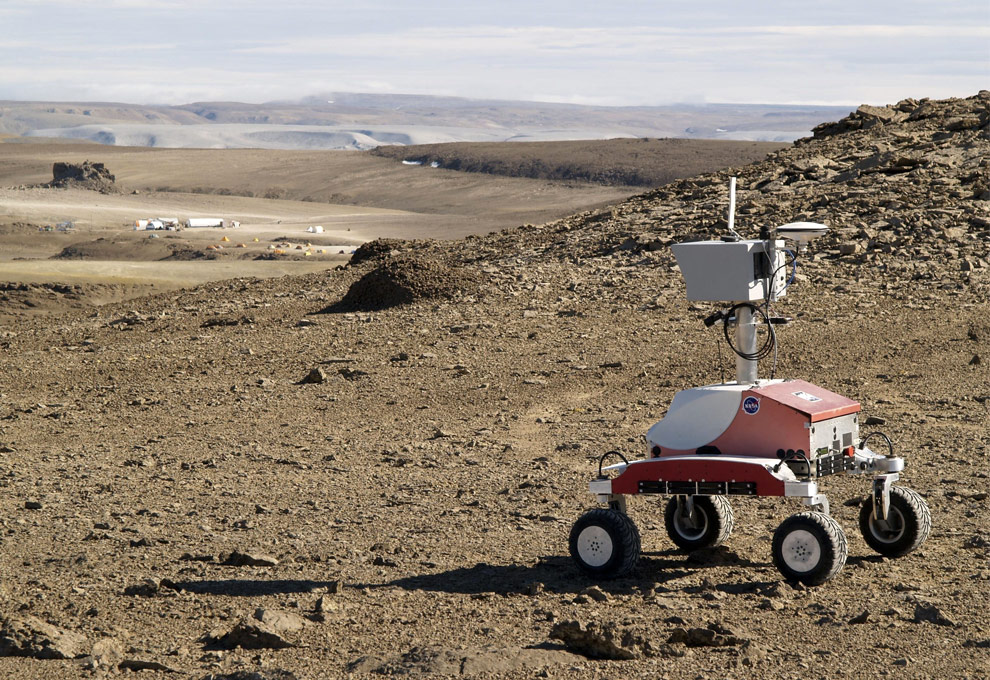
NASA's K-10 Rover "Red", an experimental survey and exploration robot, uses its 3-D scanning systems during field tests in the "frost rubble zone" of Earth near Moses Lake, WA in June of 2008. (NASA/Ames Research Center)

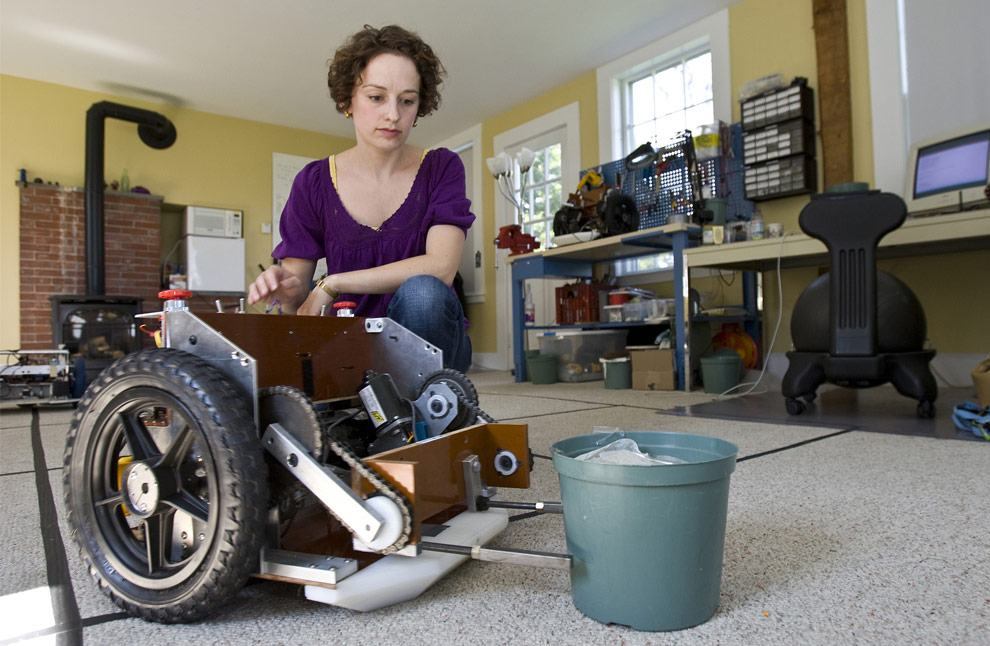
Clara Vu, a software architect with Harvest Automation, tests "Mr. Incredible", a second generation robot prototype, in the firm's Groton, MA office August 29, 2008. Mr. Incredible is a container handling system for greenhouses, automatically moving potted plants into a widening grid as they grow and need more space. (Ellen Harasimowicz for The Boston Globe)

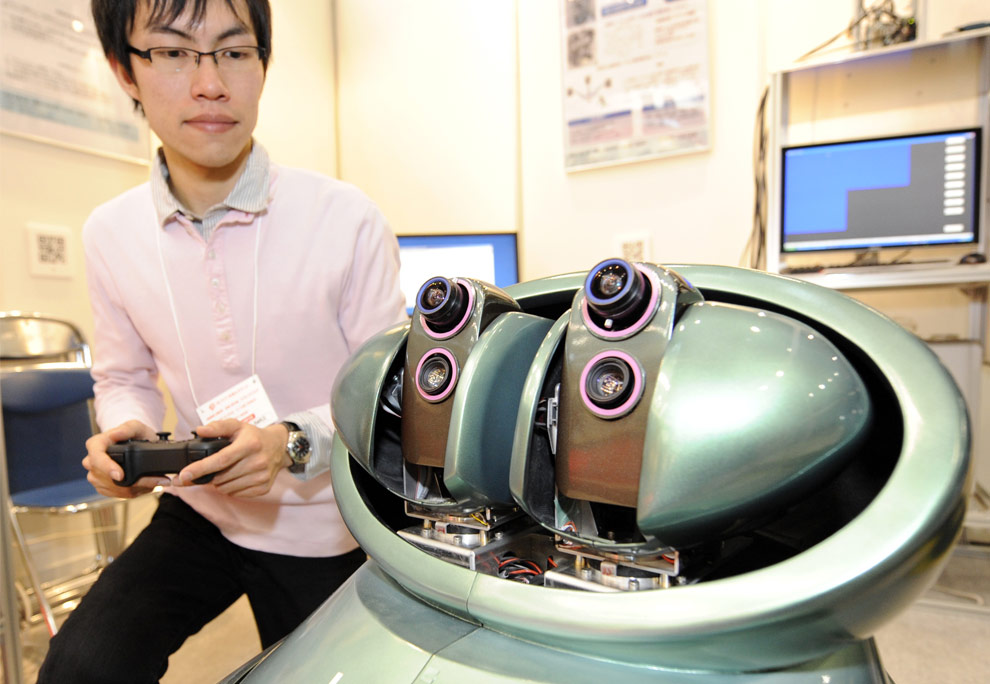
A student of the Tokyo Institute of Technology displays a prototype security robot "bino3" during a demonstration at a security show in Tokyo on March 3, 2009. The bino3 has four "eyes", which are two wide-angle stereo camera lenses and two tele-photo stereo camera lenses which can follow an subject or intruder smoothly. (AFP PHOTO / Yoshikazu TSUNO)

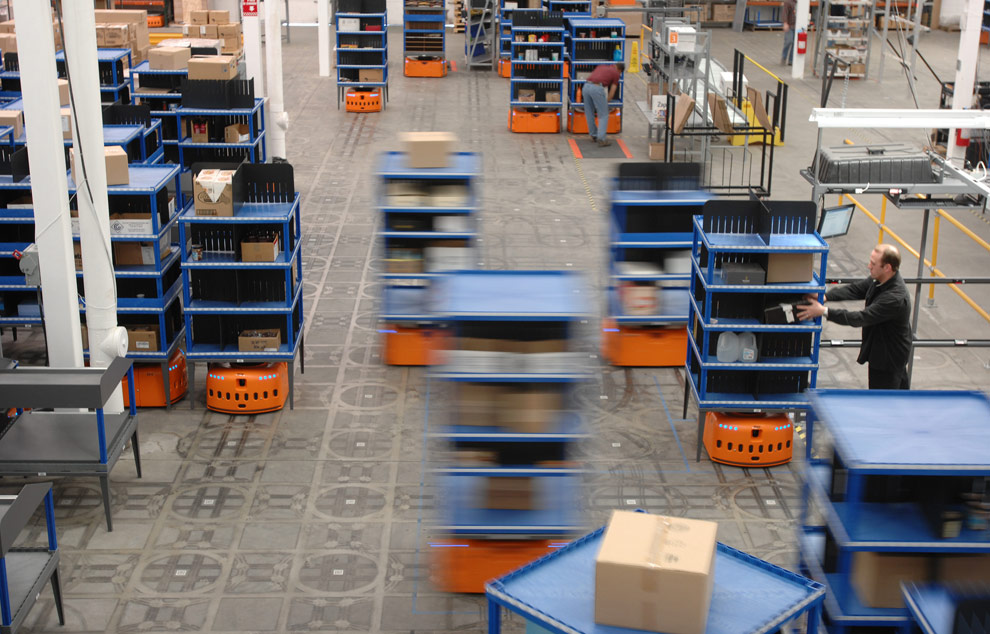
Vince Martinelli, an account manager at Kiva Systems, right, checks packages on the "pods", or shelves with dummy merchandise as robots run through a demonstration of an inventory check at the company's "demo warehouse" used to show their warehouse automation robots in action. (Josh Reynolds for The Boston Globe)

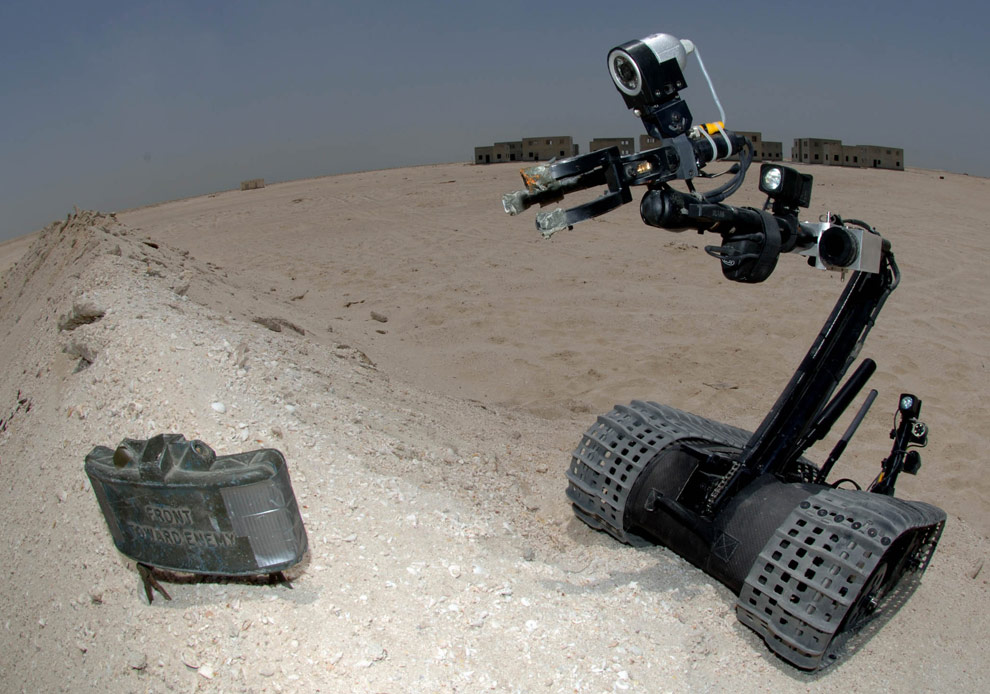
A Navy Talon 3B robot approaches a claymore land mine on a sand dune during a training exercise at a training range in Djibouti, Africa, on April 14, 2005. Navy Explosive Ordnance Disposal technicians from Mobile Unit 4 operate the robot from safe locations through the use of monitors and video equipment attached to the robot. (DoD photo by Petty Officer 1st Class Robert R. McRill, U.S. Navy)

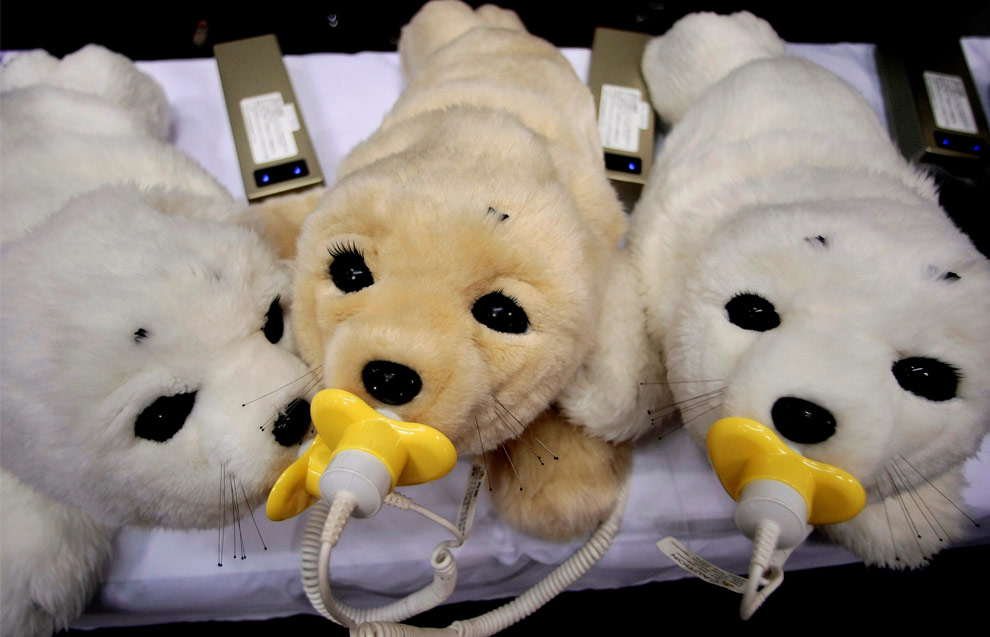
Mental commitment robotic baby seals named "Paro" are recharged at robot exhibition Robo Japan 2008 in Yokohama, Friday, Oct. 10, 2008. The 350,000 yen (US$3,480) Paro, a cooing baby harp seal robot fitted with sensors beneath its fur and whiskers, is developed by Japan's Intelligent System Co, to soothe patients in hospitals and nursing homes. (AP Photo/Itsuo Inouye)

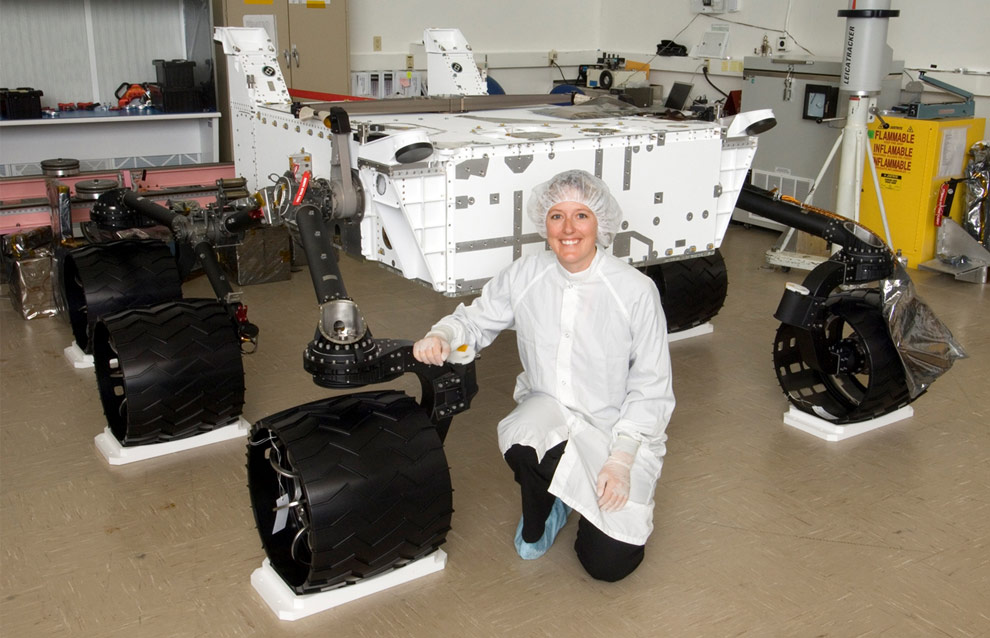
NASA's Mars Science Laboratory rover in the course of its assembly, before additions of its arm, mast, laboratory instruments and other equipment, seen in August of 2008. Its six wheels are half a meter (20 inches) in diameter. The deck is 1.1 meter (3.6 feet) above the ground. The MSL rover is being assembled and tested for launch in 2011. (NASA/JPL-Caltech)
Wednesday, March 11, 2009
Tuesday, March 10, 2009
Doomed Flight
"This is your captain Asif Ali Zardari Bhutto (101%) speaking.
"On behalf of my crew I'd like to welcome you aboard PIA International flight 602 from Nodero House Larkana to Surrey Palace, London.
We are currently flying at a height of 35,000 feet midway across the Atlantic.
"If you look out of the windows on the starboard side of the aircraft, you will observe that both the starboard engines are on fire.
"If you look out of the windows on the port side, you will observe that the port wing has fallen off.
"If you look down towards the Atlantic ocean, you will see a little yellow life raft with five people in it waving at you.
"That's me your beloved Leader,
with co-Chairman PPP- Bilawal Bhutto Zardari etc,
flight stewards Rahman Malik & Ejaz Naek ,
with our favourite air hostess
Miss.Sherry Rehman.
HAVE A LOVELY DAY !
MY PAKISTANI BROTHERS AND SISTERS..!
May God protect you always...!
Pakistan Zindabad..!!!
This is a recording."
Financial Crisis Explanation Simplified !
The financial crisis explained in simple terms:
Heidi is the proprietor of a bar in Berlin. In order to increase sales, she decides to allow her loyal customers - most of whom are unemployed alcoholics - to drink now but pay later. She keeps track of the drinks consumed on a ledger (thereby granting the customers loans).
Word gets around and as a result increasing numbers of customers flood into Heidi's bar.
Taking advantage of her customers' freedom from immediate payment constraints, Heidi increases her prices for wine and beer, the most-consumed beverages. Her sales volume increases massively.
A young and dynamic customer service consultant at the local bank recognizes these customer debts as valuable future assets and increases Heidi's borrowing limit.
He sees no reason for undue concern since he has the debts of the alcoholics as collateral.
At the bank's corporate headquarters, expert bankers transform these customer assets into DRINKBONDS, ALKBONDS and PUKEBONDS. These securities are then traded on markets worldwide. No one really understands what these abbreviations mean and how the securities are guaranteed.
Nevertheless, as their prices continuously climb, the securities become top-selling items.
One day, although the prices are still climbing, a risk manager (subsequently of course fired due his negativity) of the bank decides that slowly the time has come to demand payment of the debts incurred by the drinkers at Heidi's bar.
However they cannot pay back the debts.
Heidi cannot fulfil her loan obligations and claims bankruptcy.
DRINKBOND and ALKBOND drop in price by 95 %. PUKEBOND performs better, stabilizing in price after dropping by 80 %.
The suppliers of Heidi's bar, having granted her generous payment due dates and having invested in the securities are faced with a new situation.
Her wine supplier claims bankruptcy, her beer supplier is taken over by a competitor.
The bank is saved by the Government following dramatic round-the-clock consultations by leaders from the governing political parties.
The funds required for this purpose are obtained by a tax levied against the non-drinkers.
Finally an explanation I understand . . .